
Excessive sweating – hyperhidrosis – is where the body produces more sweat than is needed to cool it down. It can be awkward and uncomfortable and if it’s stopping you from doing the things you love, then please contact us for advice.
But, is it really excessive sweating?
Everyone sweats—it’s our body’s natural way of keeping cool. We sweat when we’re hot, nervous, stressed, exercising or just because it’s a warm or hot day. With hyperhidrosis you will sweat in these same circumstances, the difference is the sweat will be more than anyone else.
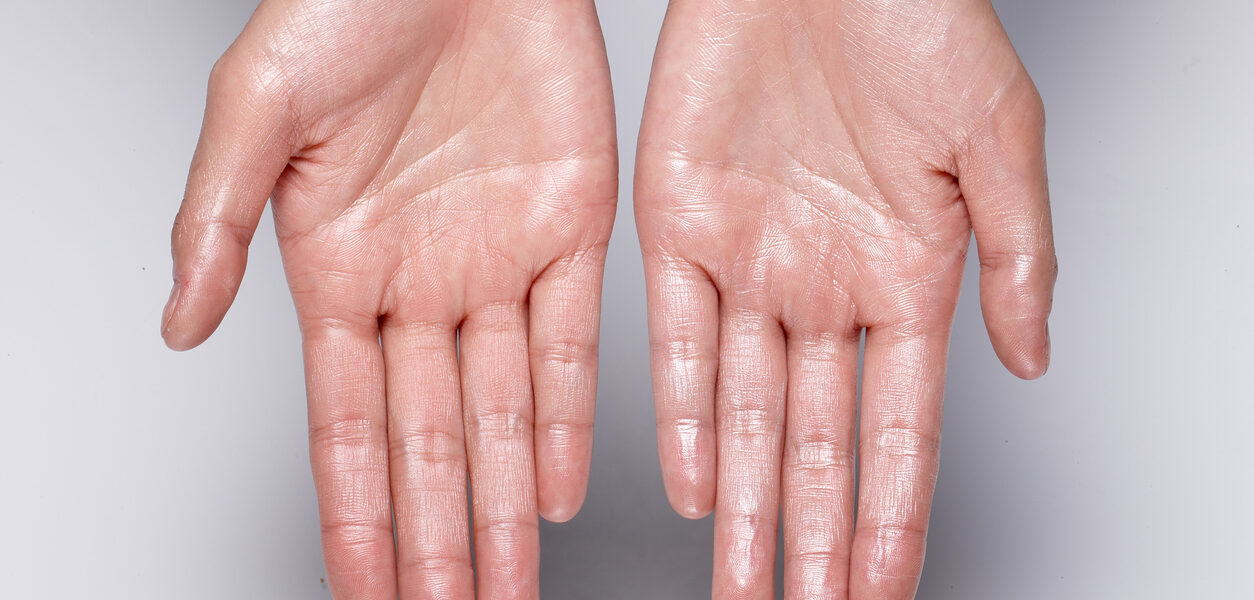
On the hands you may not be able to hold something for fear it will slip out, underarms will create big wet patches on clothing. On the feet your shoes and/or socks will feel like they’re slipping.
In some cases, sweating may happen even when you’re not doing anything, without any of the triggers mentioned.
Hyperhidrosis is either primary, which often starts in childhood or in the teen years with no known cause, or secondary, which is usually related to another medical condition or medication you’re taking. Some people find it gets better as they get older and so grow out of it, while others might always have it.
Over-the-counter treatments like antiperspirants can provide some relief if the sweating is under the arms.
What treatment options are available for excessive sweating?
We use injections to relax the muscles responsible for creating sweat, particularly on the face, hands and feet. Injections will provide relief for six to nine months. Then a top-up after your body has absorbed the treatment.
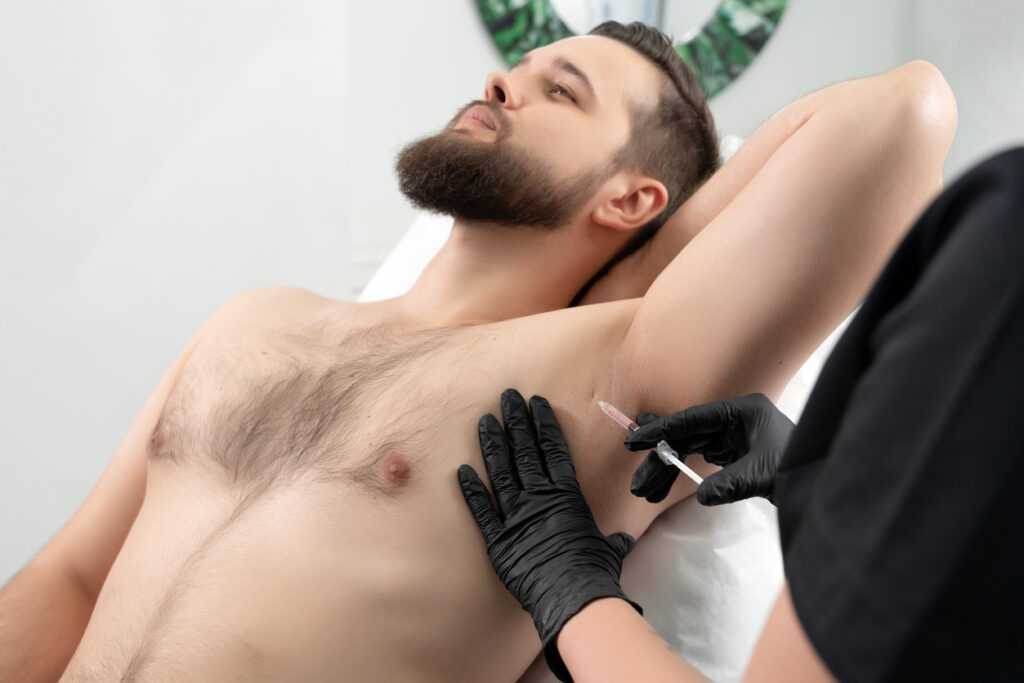
If injections aren’t the best option for you, and you would like a permanent solution, we can discuss a minimally invasive surgical procedure called Endoscopic Thoracoscopic Sympathectomy (ETS).
A few lifestyle tweaks may make a difference
Drinking more water is important as you lose fluids through sweating. Going for loose, natural fabrics like cotton or merino helps your skin breathe and stay dry. Let your feet breathe by wearing jandals and sandals or look for socks that are designed to wick moisture away when wearing shoes.
Managing stress and anxiety can also help. Try relaxation, mindfulness, meditation or gentle yoga. Keep your bedroom cool with a fan and cotton sheets. Try to work in cooler spaces. Also, be mindful of foods or drinks – like caffeine – that might make you sweat more.
Book a chat with our nurse to talk through options that may be best for you.