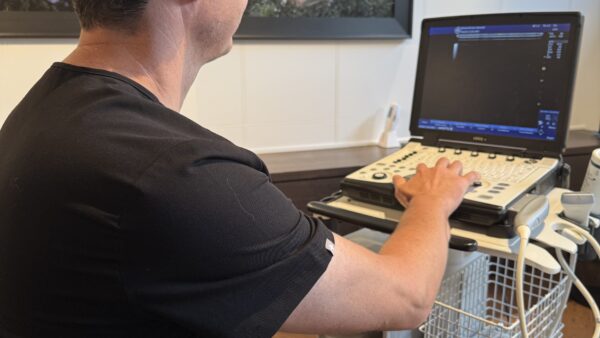

You’ve had your diagnosis and your ultrasound scan, or about to, so what happens next? How does the specialist decide which treatment is the best option for your varicose veins? Medical adhesive or radiofrequency?
We use medical adhesive or radiofrequency to treat the main superficial veins. Both options are effective treatments for varicose veins and both are minimally invasive. Each has its own benefits and drawbacks. Our specialist will talk you through the option that will suit you best.
What are the pros and cons of medical adhesive?
Medical adhesive treatment (a medical glue is used to seal the vein) needs fewer local anaesthetic injections, sometimes just one. There is less bruising and a lower risk of numbness from nerve damage. It is a quicker and more comfortable procedure, so recovery is faster. If there is any possibility you may be allergic to the adhesive, we would recommend radiofrequency.
What are the pros and cons of radiofrequency?
Radiofrequency ablation (RFA) uses heat to close the main superficial vein. It has been around longer than medical adhesive, so there is more research available on long-term outcomes. Some studies suggest it may reduce the chance of varicose veins recurring five years after treatment but more recent studies show the techniques have equal outcomes. RFA involves more injections in the treatment area, which can make it less comfortable. Bruising is also more common with RFA and, while rare, there is a risk of skin burns. The main risk is nerve damage from heat damage to surrounding nerves. Studies show this risk ranges from 2-13%. Recovery can take a little longer, too.
How are smaller varicose veins treated?
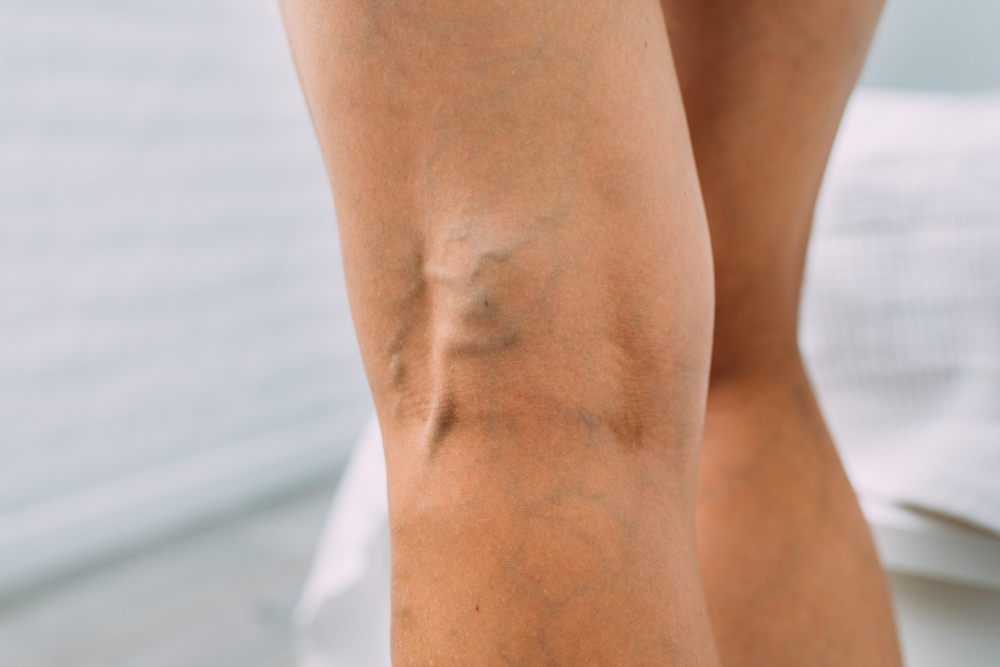
If your varicose veins are smaller, they may be in clusters, bigger than spider veins but smaller than the larger rope-like veins people often associate with varicose veins. In that case we’ll often recommend a round of sclerotherapy and sometimes two. This involves injecting a small amount of sclerosant into the veins. The solution irritates the vein wall so the vein closes and gradually fades. Mostly treated after larger veins but not everyone has larger varicose veins to begin with.
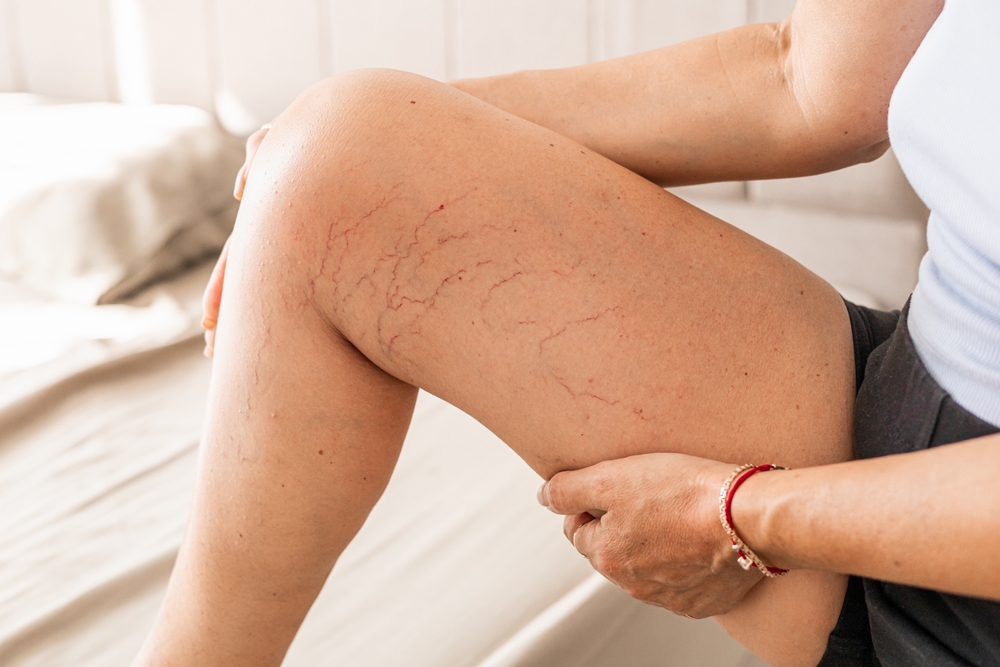
If you have lots of smaller spider veins, we’ll usually recommend microsclerotherapy. A tiny amount of sclerosant is injected into these little veins to close them off so they can gradually fade. For even smaller spider veins, we will usually recommend a course of skin laser treatment as well.
Surgery is still very useful in some cases
In a small number of cases, our specialists may recommend a minor surgery procedure to surgically remove the vein, typically under local anaesthetic. Usually only considered when the main point of leakage causing varicose veins is especially large and treatments such as RFA or medical adhesive are not likely to give a good long-term result.
Compression stockings must stay on for 10 days
We fit thigh-high compression stockings for you to wear for around 10 days after our procedures. They’re a vital part of recovery, helping to keep blood moving, support circulation, reduce swelling and give your veins the best chance to heal well.
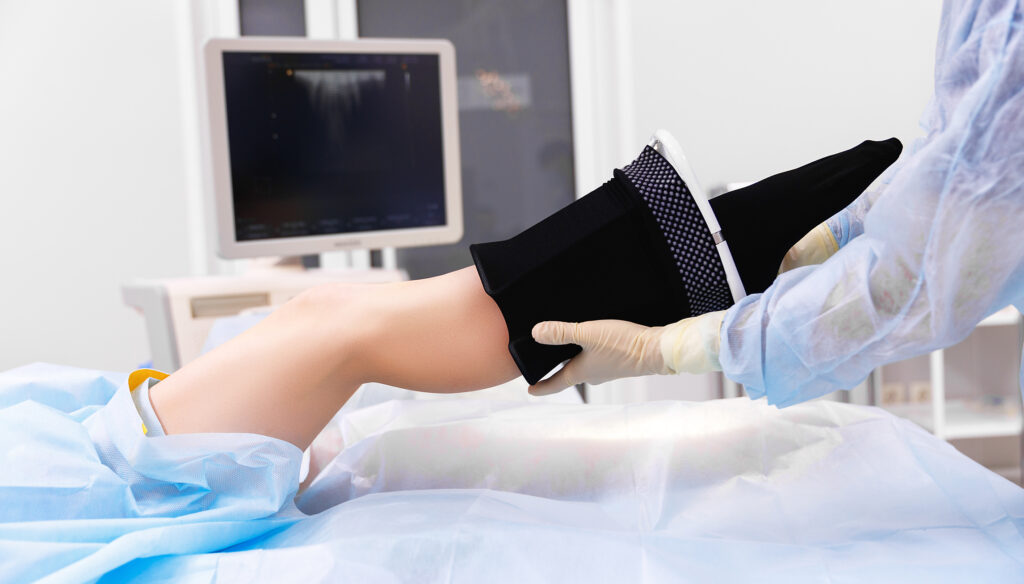
One of our specialist nurses will check in with you a couple of days after treatment and again around the six-week mark.